LIBROLUX
Air Conditioning and Refrigeration in Drawings

The easiest way to understand air conditioning and refrigeration, with each topic drawn on one page

Pressures, refrigerants and pipes you can't see, and the course keeps moving.
Here, each topic fits on one page: the cycle, the split-unit installation and its faults, all drawn.

I want to learn it with drawings

Secure paymentInstant download30-day money-back guarantee

One topic per pageLook at the drawing and read just what you need
70 illustrated pagesFrom the cycle to the faults, with review tables and a glossary
The split unit, step by stepFrom flaring the pipe to the vacuum and the charge

What the pages look like

Real pages from the book. Swipe to see more.

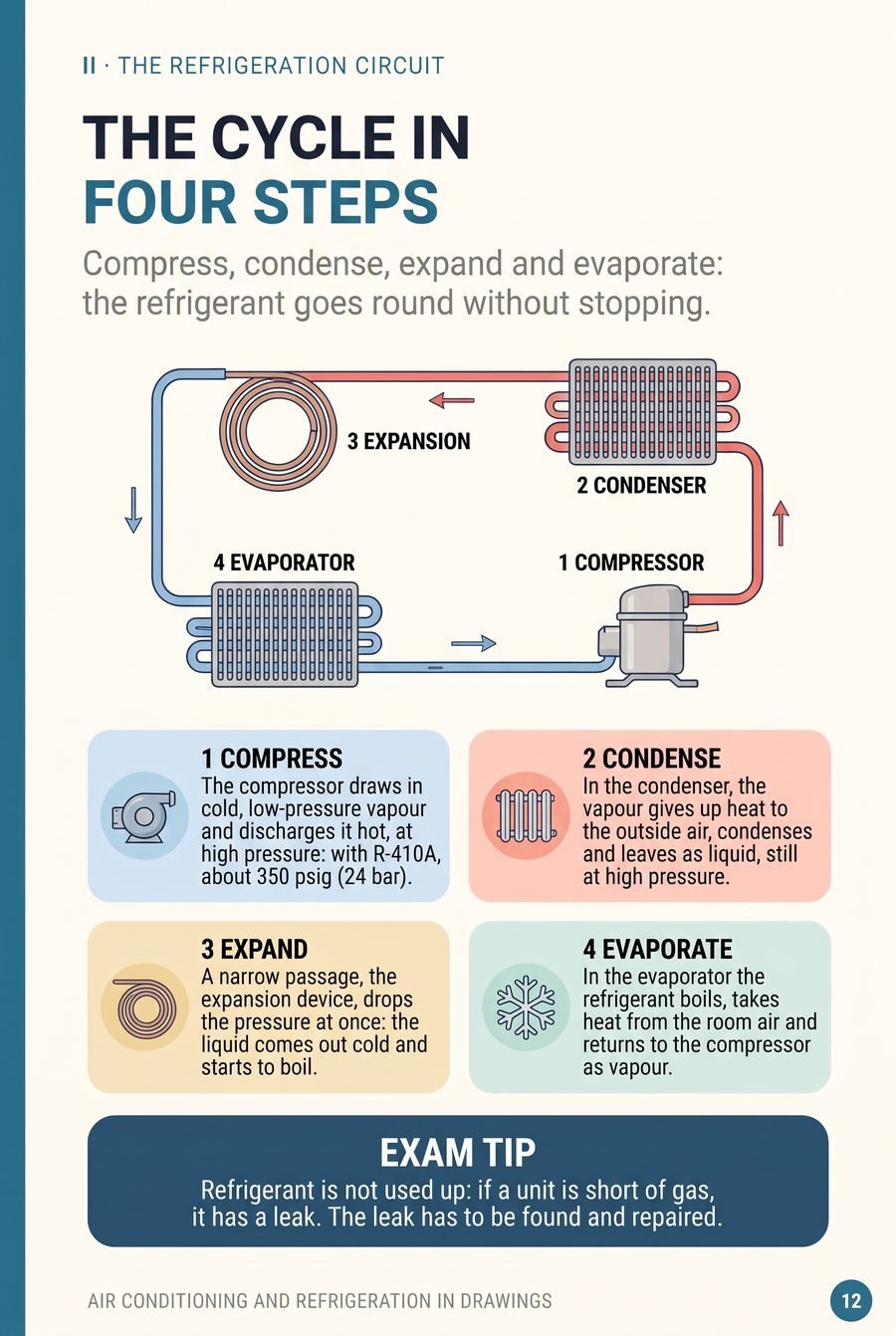
p. 12
p. 12 · THE CYCLE IN FOUR STEPS
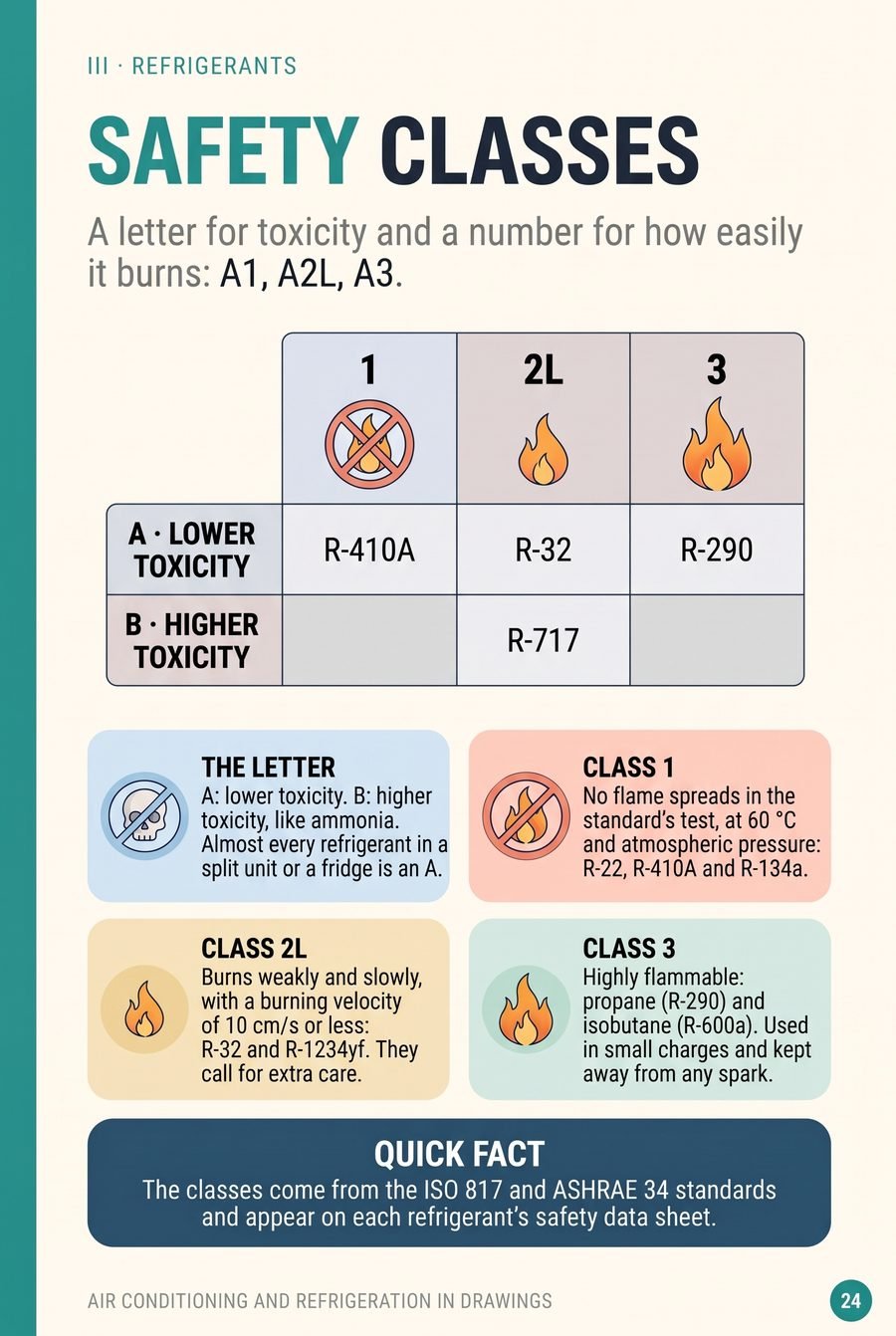
p. 24
p. 24 · SAFETY CLASSES
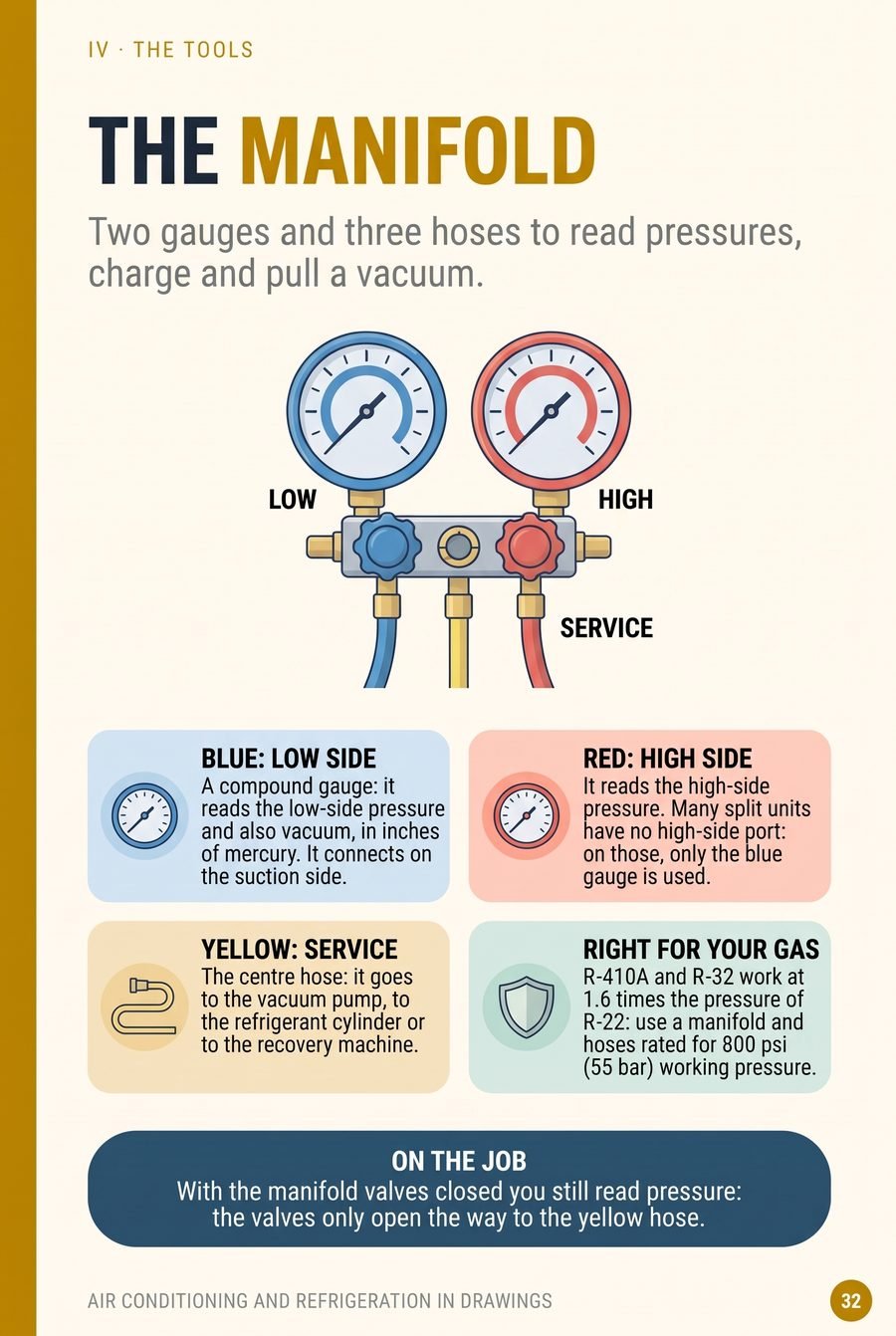
p. 32
p. 32 · THE MANIFOLD
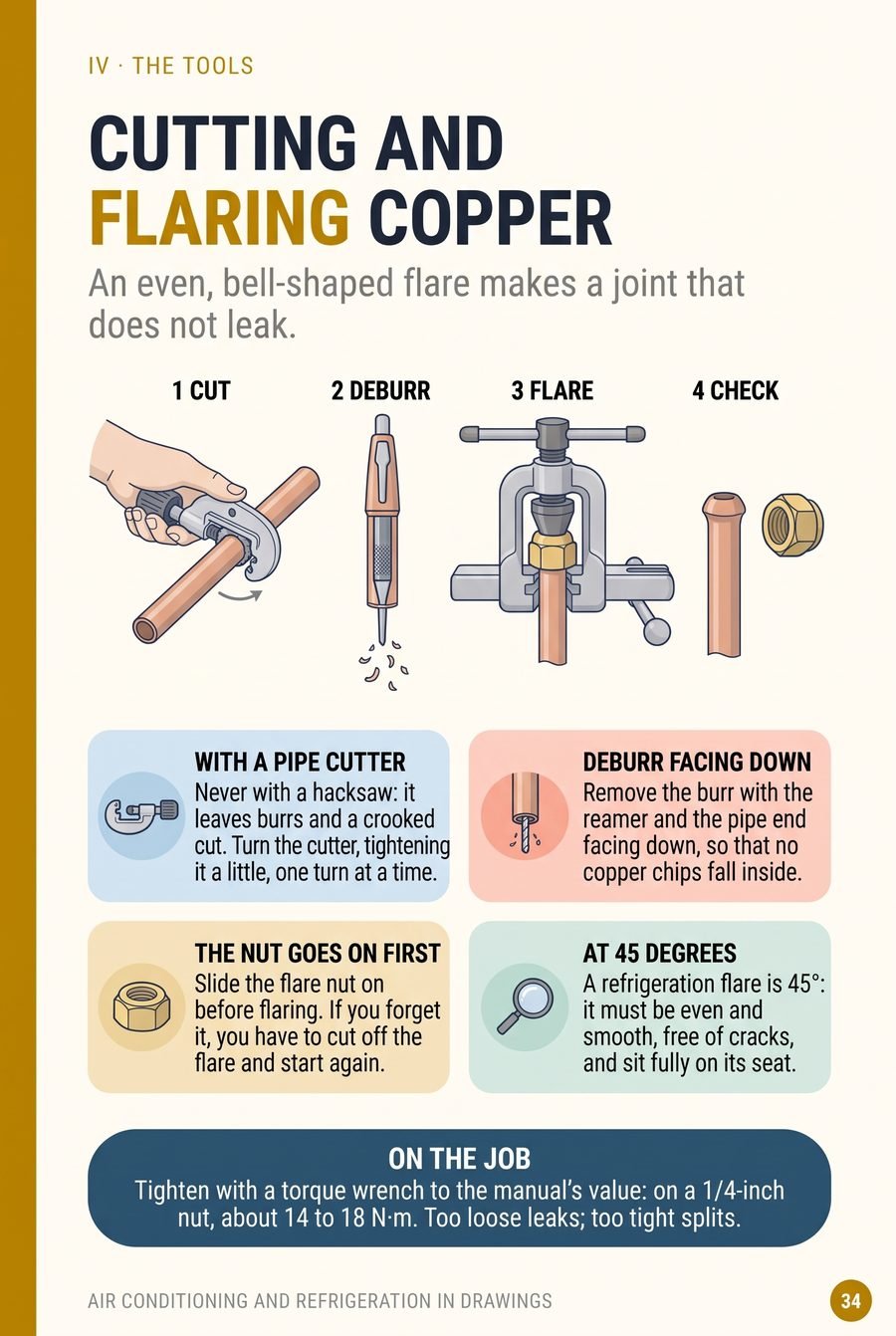
p. 34
p. 34 · CUTTING AND FLARING COPPER
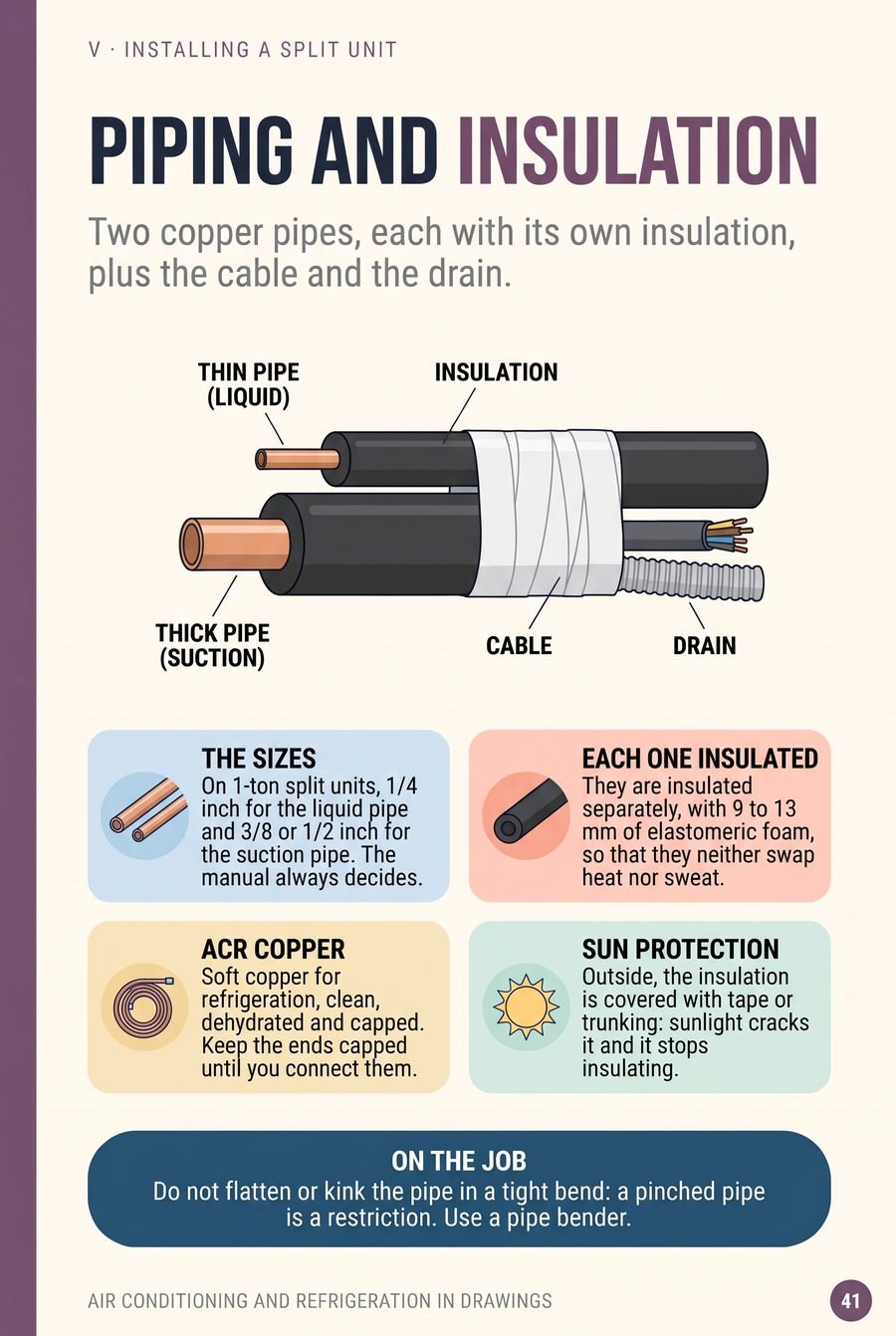
p. 41
p. 41 · PIPING AND INSULATION
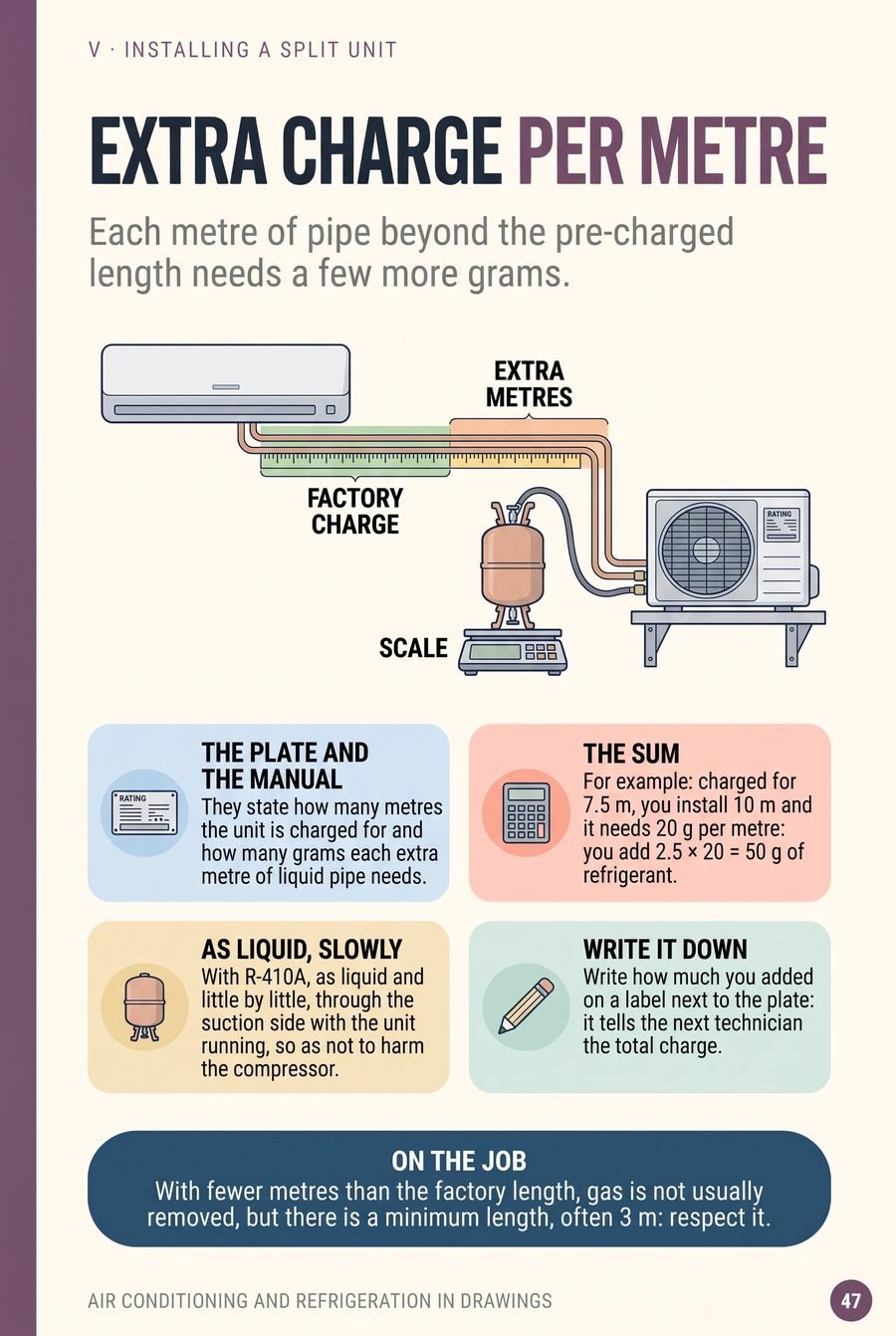
p. 47
p. 47 · EXTRA CHARGE PER METRE
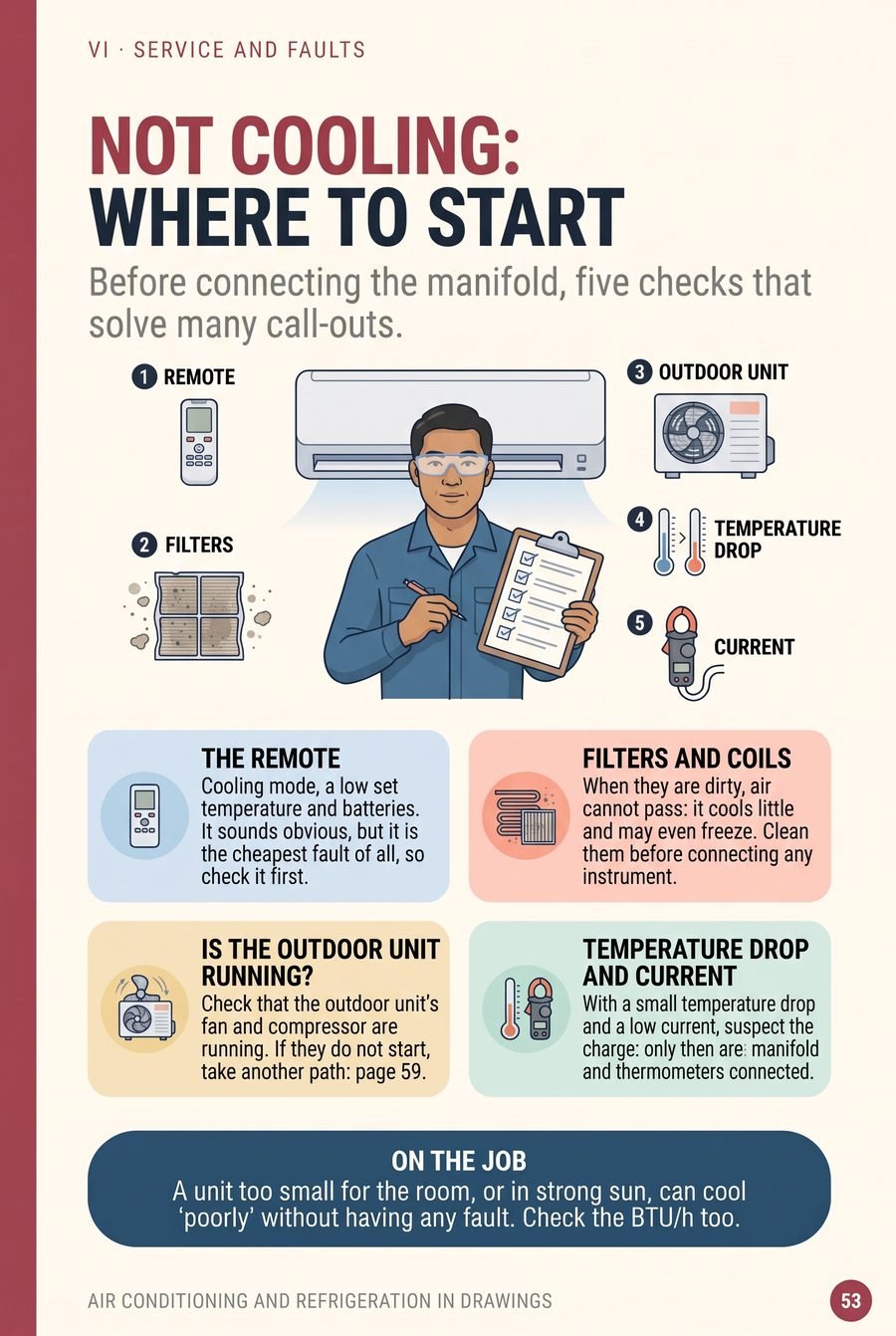
p. 53
p. 53 · NOT COOLING: WHERE TO START
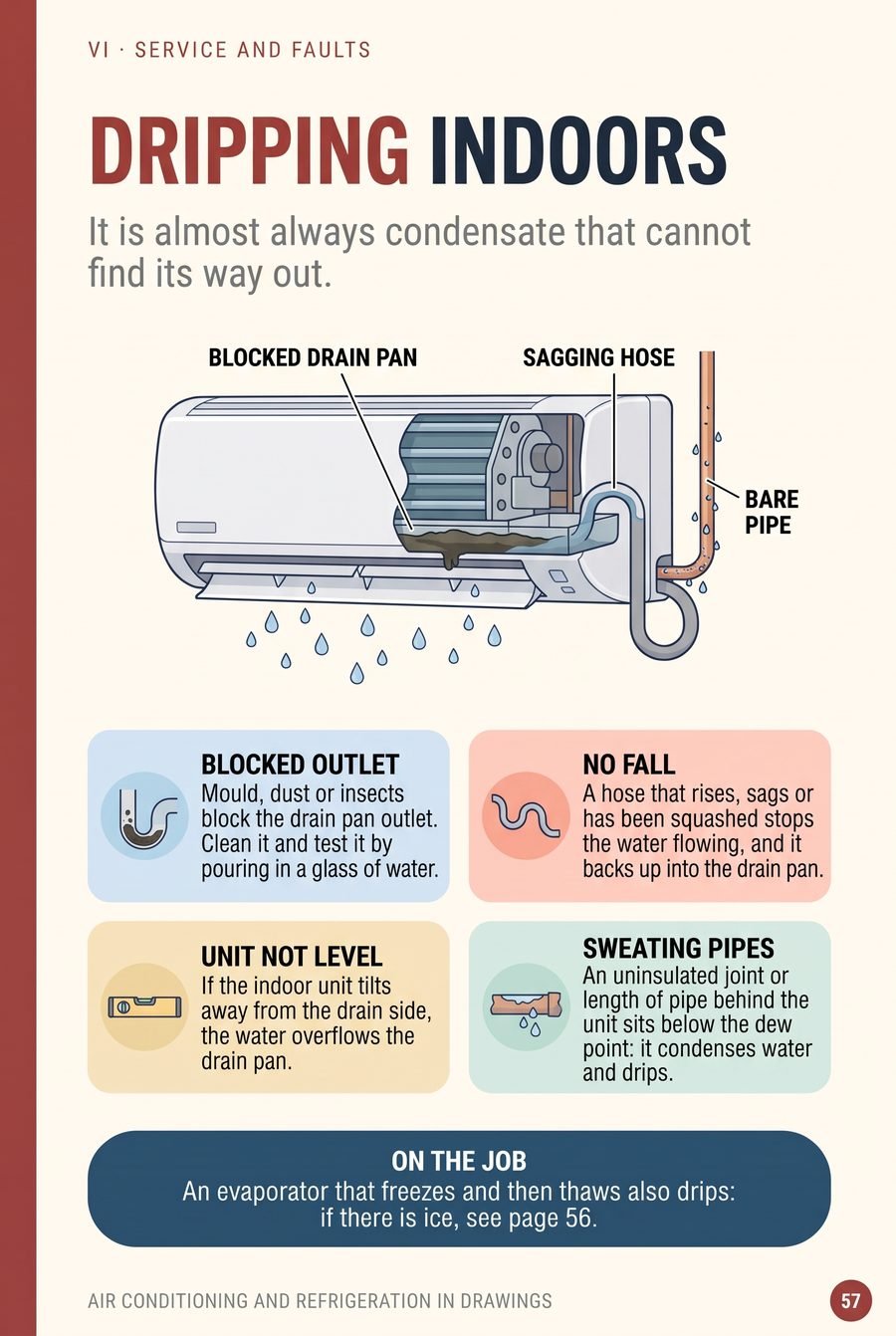
p. 57
p. 57 · DRIPPING INDOORS
1 / 8

It's not that it's hard. It's that you can't see the cold.

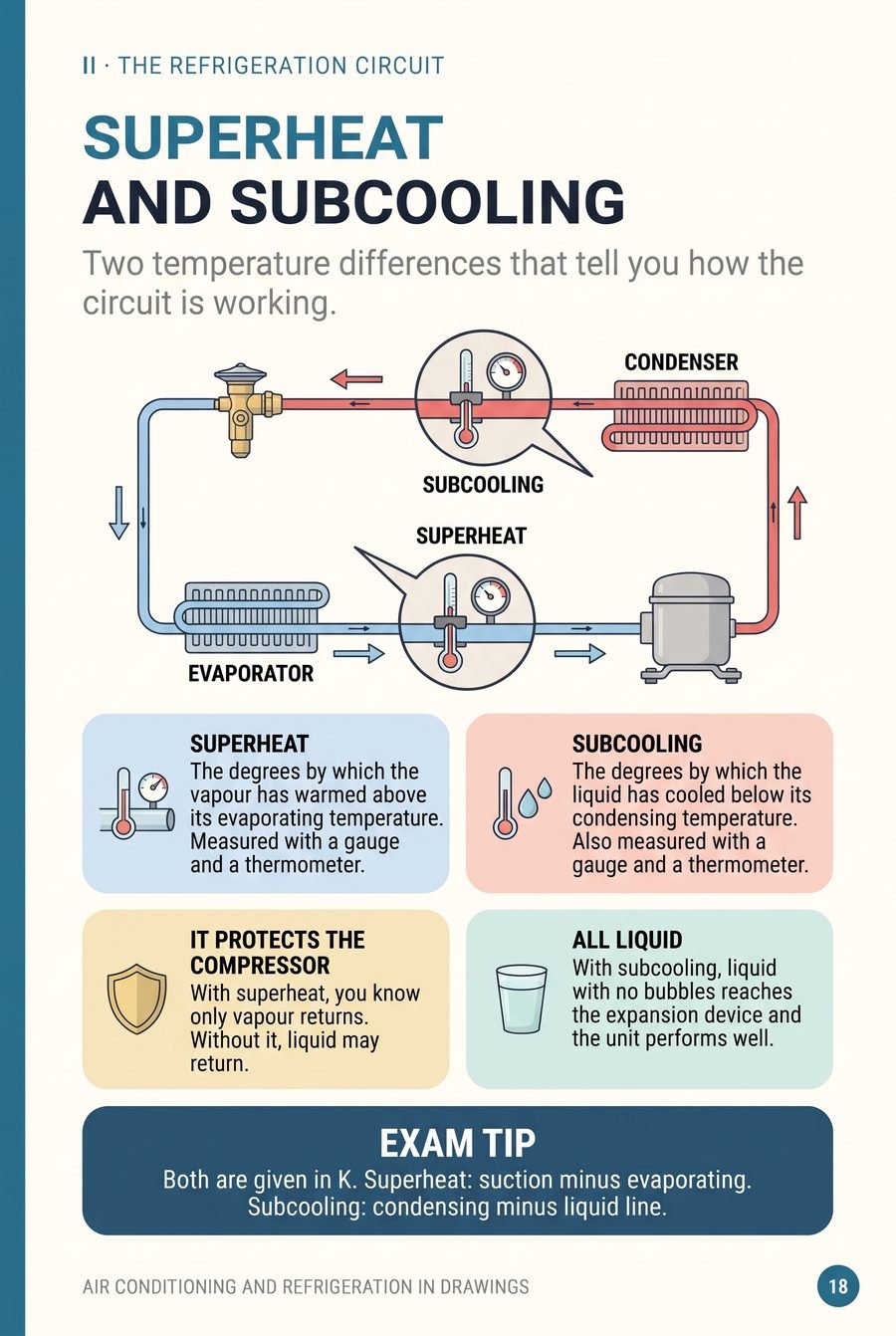
On the course they talk about pressure, superheat and subcooling, about a refrigerant that changes state inside a sealed pipe. Explained in words, it's hard to picture. Drawn, with the refrigerant in blue on the low side and red on the high side, it makes sense at a glance.

p. 18: SUPERHEAT AND SUBCOOLING

Swap endless manuals for one page that makes sense

Before

One topic per page: look at the drawing first, then read just what you need. Each drawing shows the part or the step as you will see it on a real unit, with its technical names and its colours. Each box is one key idea, with its technical term and one precise fact. If you can explain it in your own words, you know it. It flags what gets mixed up most in an exam or on the job, or a fact worth always having at hand. The last pages bring together the refrigerants, the faults, a summary of the whole book and a glossary of key words. Seven parts and a final review, with one topic per page. It does not make cold: it takes heat from one place and moves it to another. Cold is the absence of heat. The system collects the room’s heat in the indoor unit and releases it at the outdoor unit. On its own, heat flows from hot to cold: that is the second law of thermodynamics. The other way round, it takes work. The compressor does it: with electricity it pumps the refrigerant, so heat can go from 24 °C inside to 35 °C outside. The fridge, the freezer, the cold room and the split unit all do the same…

100-page manuals without a single drawing

After

Every topic on one page, drawn and in order

What's inside

8 parts and 70 pages, one topic per page.

4I · HEAT AND PRESSURE
  • WHAT A COOLING SYSTEM DOESp. 4
  • HEAT AND TEMPERATUREp. 5
  • SENSIBLE HEAT AND LATENT HEATp. 6
  • CHANGES OF STATEp. 7
  • PRESSURE AND BOILINGp. 8
  • ABSOLUTE AND GAUGE PRESSUREp. 9
  • UNITS OF COOLING CAPACITYp. 10
  • HUMIDITY AND DEW POINTp. 11
12II · THE REFRIGERATION CIRCUIT
  • THE CYCLE IN FOUR STEPSp. 12
  • THE TWO SIDES OF THE CIRCUITp. 13
  • THE COMPRESSORp. 14
  • THE CONDENSERp. 15
  • THE CAPILLARY AND THE EXPANSION VALVESp. 16
  • THE EVAPORATORp. 17
  • SUPERHEAT AND SUBCOOLINGp. 18
  • THE HEAT PUMPp. 19
  • THE INVERTER UNITp. 20
  • CAPACITY, EER AND COPp. 21
  • CIRCUIT ACCESSORIESp. 22
23III · REFRIGERANTS
  • WHAT IS A REFRIGERANT?p. 23
  • SAFETY CLASSESp. 24
  • OZONE AND GLOBAL WARMINGp. 25
  • WHERE EACH ONE IS USEDp. 26
  • BLENDS AND GLIDEp. 27
  • THE PRESSURE-TEMPERATURE CHARTp. 28
  • FLAMMABLE REFRIGERANTSp. 29
  • COMPRESSOR OILp. 30
31IV · THE TOOLS
  • THE TECHNICIAN’S TOOLSp. 31
  • THE MANIFOLDp. 32
  • THE VACUUM PUMP AND THE MICRON GAUGEp. 33
  • CUTTING AND FLARING COPPERp. 34
  • BRAZING WITH NITROGENp. 35
  • HOW TO FIND A LEAKp. 36
  • MULTIMETER AND CLAMP METERp. 37
  • THE SCALE AND THE RECOVERY MACHINEp. 38
39V · INSTALLING A SPLIT UNIT
  • HOW MANY BTU YOU NEEDp. 39
  • WHERE EACH UNIT GOESp. 40
  • PIPING AND INSULATIONp. 41
  • THE CONDENSATE DRAINp. 42
  • THE ELECTRICAL CONNECTIONp. 43
  • THE PRESSURE TESTp. 44
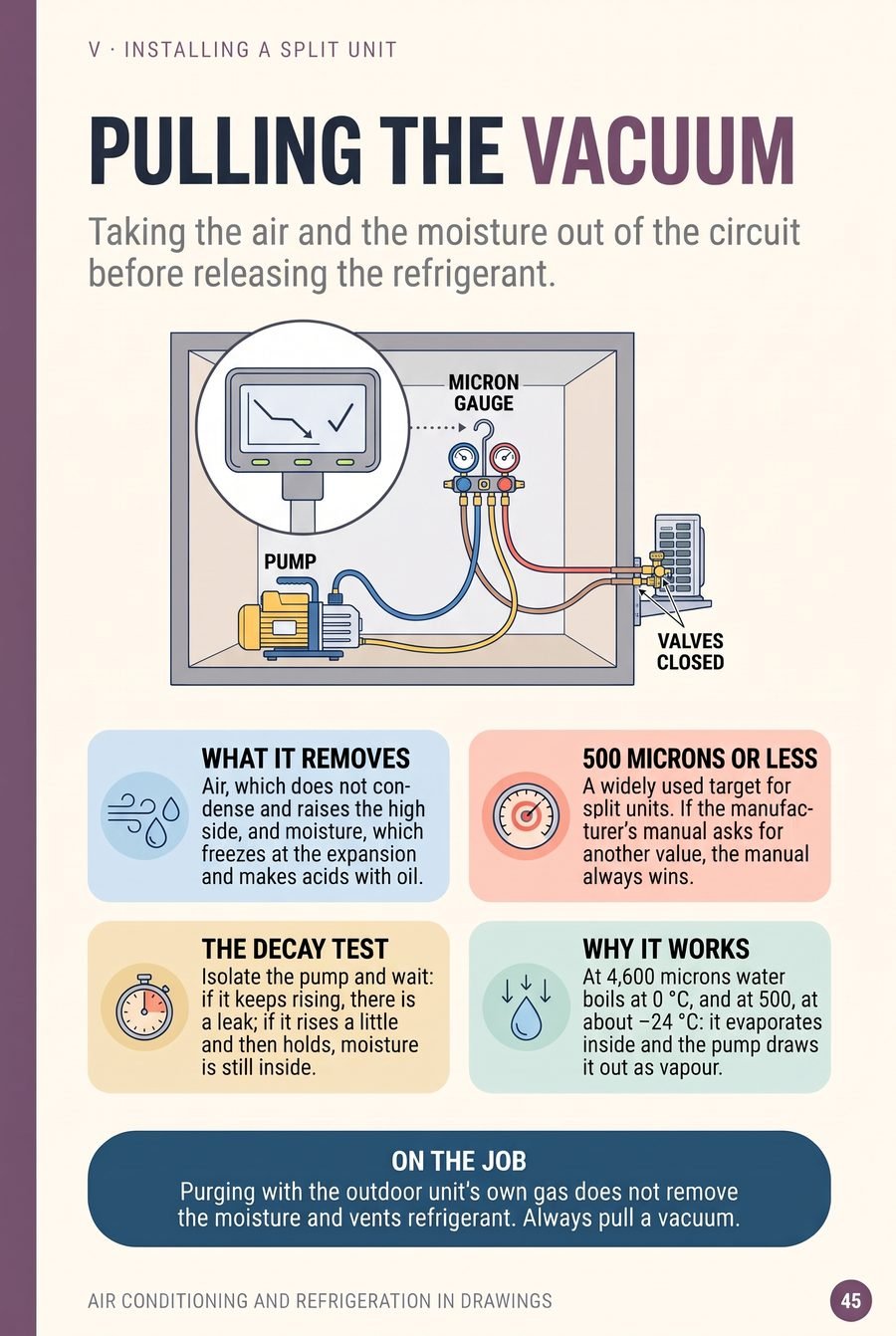
  • PULLING THE VACUUMp. 45
  • OPENING THE VALVES AND STARTING UPp. 46
  • EXTRA CHARGE PER METREp. 47
  • COMMISSIONINGp. 48
49VI · SERVICE AND FAULTS
  • HOW TO READ THE RATING PLATEp. 49
  • SERVICING A SPLIT UNITp. 50
  • MEASURING SUPERHEATp. 51
  • MEASURING SUBCOOLINGp. 52
  • NOT COOLING: WHERE TO STARTp. 53
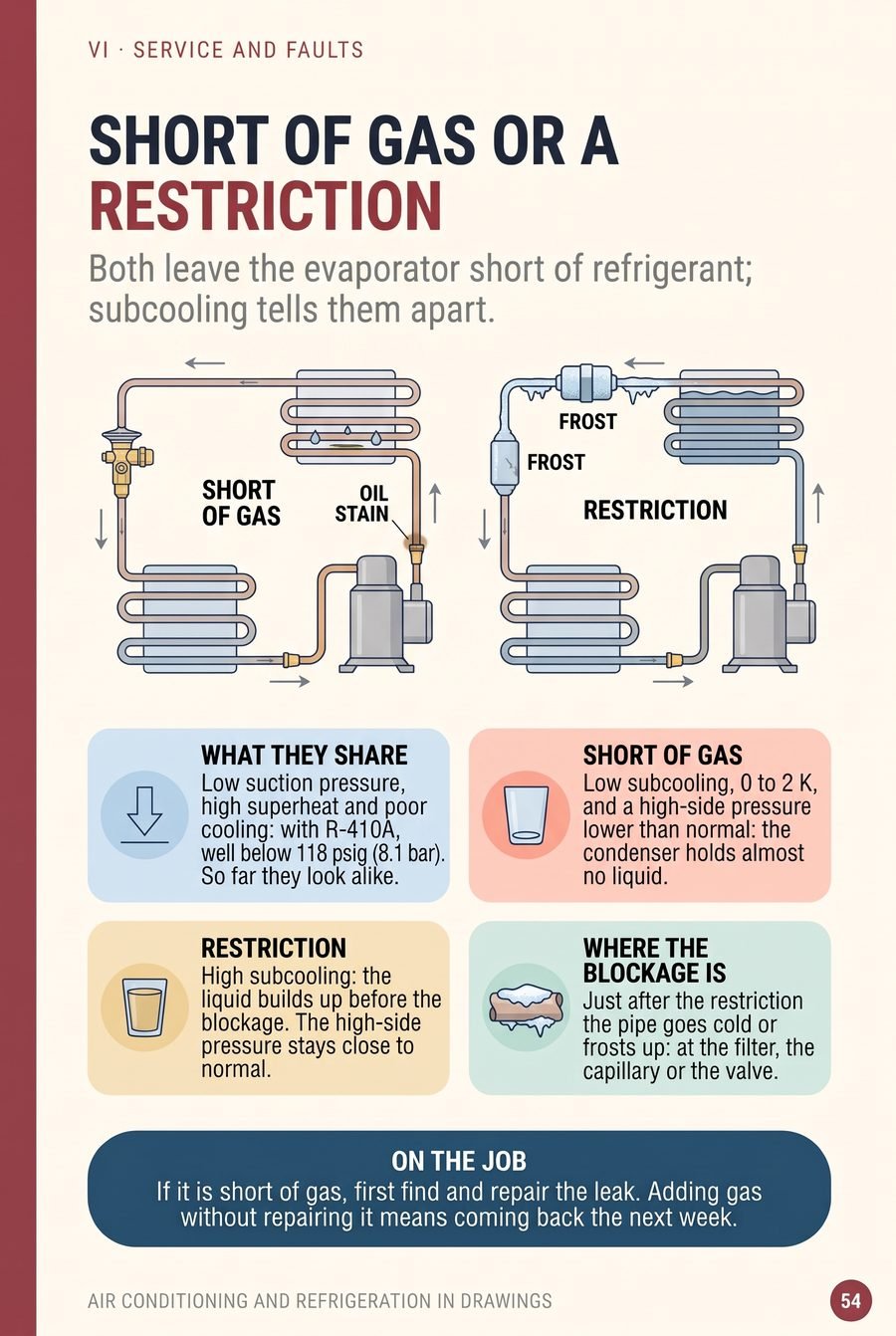
  • SHORT OF GAS OR A RESTRICTIONp. 54
  • HIGH-SIDE PRESSURE TOO HIGHp. 55
  • THE FROZEN EVAPORATORp. 56
  • DRIPPING INDOORSp. 57
  • NOISY UNITp. 58
  • THE OUTDOOR UNIT WON’T STARTp. 59
  • THE BREAKER TRIPSp. 60
  • REPAIRING A LEAKp. 61
  • RECOVER, RECYCLE, RECLAIMp. 62
  • THE DOMESTIC FRIDGEp. 63
64VII · SAFETY AND REGULATIONS
  • SAFETY AT WORKp. 64
  • R-22 AND THE OZONE LAYERp. 65
  • THE KIGALI AMENDMENT AND HFCSp. 66
67REVIEW
  • REFRIGERANTS AT A GLANCEp. 67
  • QUICK DIAGNOSISp. 68
  • THE BOOK IN 20 LINESp. 69
  • GLOSSARYp. 70

What if every topic fit on a single page?

That's this book: 70 pages, one topic on each. At the top, the title and a line that sums it up; in the middle, a drawing that explains it; below, four boxes with the key points and a strip with what gets mixed up most, in the exam or on the job.

p. 54: SHORT OF GAS OR A RESTRICTION

What you get

Everything you get today

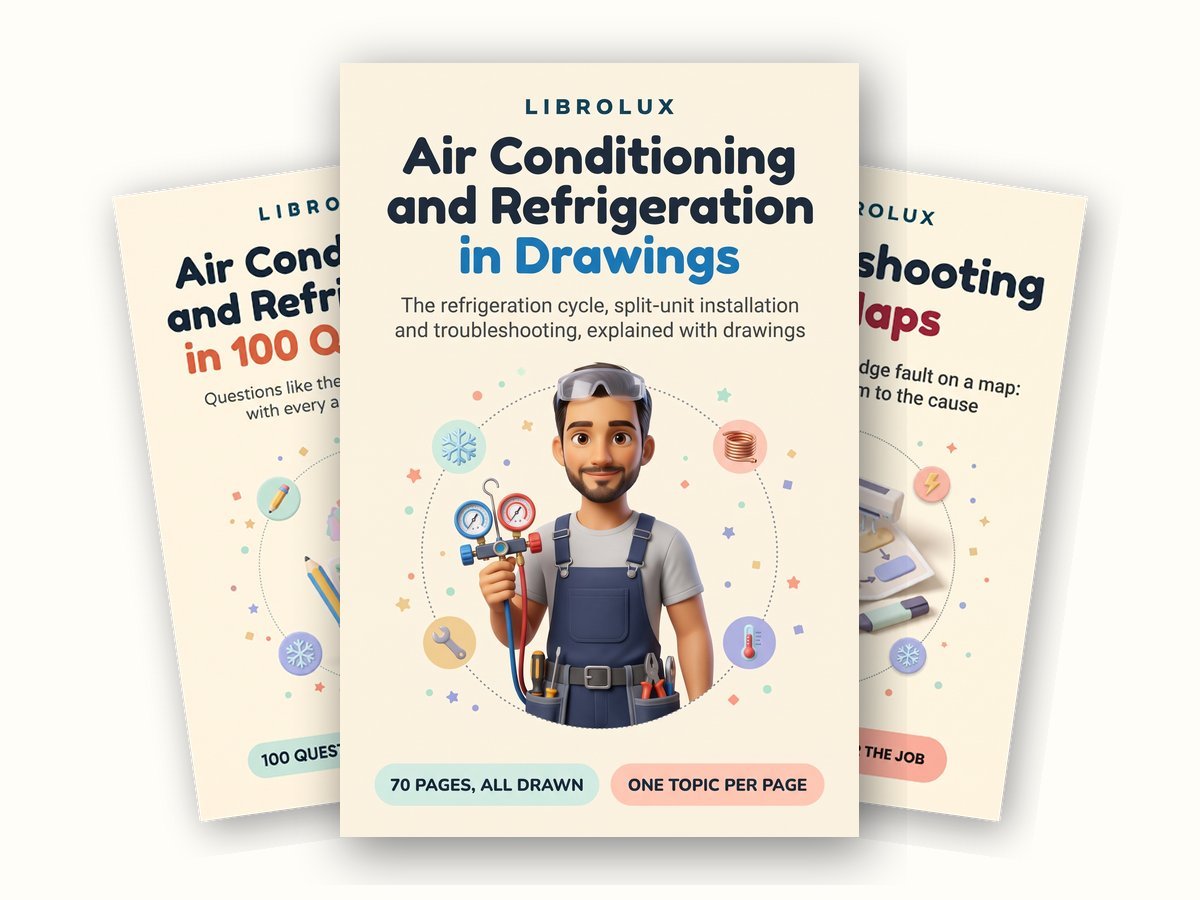
Book “Air Conditioning and Refrigeration in Drawings” 70 illustrated pages On its own: US$49.20
Bonus 1: Air Conditioning and Refrigeration in 100 QuestionsQuestions like the ones in your course, each with its answer explained and the page of the book that covers it.Pre-order: arrives the day after you buy
Bonus 2: Troubleshooting in MapsEach split-unit and fridge fault on its own map: from the symptom to the cause, with the page of the book for each one.Pre-order: arrives the day after you buy
Total valueUS$49.20
TodayUS$19.90

You save US$29.30

I want the book for US$19.90

Secure paymentInstant download30-day money-back guarantee

Is it for you?

If you're on an air-conditioning and refrigeration courseTo understand each topic before class and not get lost among pressures and refrigerants.
If you're starting out in the tradeTo get the split-unit installation, the measurements and the most common faults clear in your head.
If you want to know how cooling worksTo see what happens inside an aircon or a fridge, and why it sometimes stops cooling.

In short, you get

US$19.90

I want the book for US$19.90
30DAYS

Money back within 30 days

If the book isn't what you expected, email us at hello@librolux.com within 30 days and we'll refund 100% of what you paid.

Frequently asked questions

What do I get?

The book “Air Conditioning and Refrigeration in Drawings” in PDF (70 illustrated pages), which you download right after you pay, and 2 bonuses: “Air Conditioning and Refrigeration in 100 Questions” and “Troubleshooting in Maps”. The bonuses are a pre-order: they arrive by email the day after you buy.

How much is it?

US$19.90 (in US dollars), one time. It's not a subscription.

Who is it for?

For students on air-conditioning and refrigeration courses, for technicians starting out in the trade and for anyone who wants to understand how cooling works.

Where does the content come from?

Team Librolux wrote it from the refrigerants' pressure-temperature tables and safety data sheets, the international safety classes (ISO 817), IEC 60335-2-40 for flammable refrigerants, the Montreal Protocol and its Kigali Amendment, and manufacturers' installation manuals.

Which refrigerants does it cover?

The ones you'll come across most: R-32 and R-410A in new split units, R-22 in older units, R-134a and R-600a in fridges, and R-290. Each with its pressure, its safety class and why it's recovered instead of being released into the air.

Does it replace a course or a licence?

No. It's for understanding and revising faster, and it doesn't give you a licence or a certificate. Hands-on work with units and tools is learnt on a course and on the job, alongside someone experienced, and refrigerant and electrical work is for people with the licence or registration your country requires.

How do I read it?

It's a PDF: open it on your phone, tablet or computer, and print it if you like.

Can I buy each part on its own?

Yes. Each one has its own price: Book: US$49.20
One last thing before you decide…

You don't have to picture the refrigerant inside the pipe: you see it drawn.

You don't have to read 100-page manuals to install a split unit.

You don't have to wait: the book downloads right after you pay.

US$19.90

I want the book for US$19.90

Secure paymentInstant download30-day money-back guarantee